If you want Palm Beach County ocean access without the scale and pace of a larger beach town, Juno Beach stands out quickly. This is a small, established coastal community where the beach, preserved land, and residential character shape everyday life. If you are thinking about buying here, understanding that balance can help you decide whether it fits the way you want to live. Let’s take a closer look.
Why Juno Beach Feels Different
Juno Beach is compact by design and by reality. The town covers just 2.0 square miles and had 3,858 residents in the 2020 Census, which helps explain why it often feels quieter and more contained than larger coastal markets nearby.
That smaller scale is not accidental. The town’s comprehensive planning materials report that 98.7% of Juno Beach was already developed, so the housing market is shaped more by established neighborhoods, existing buildings, and selective redevelopment than by large new subdivisions.
For you as a buyer, that usually means a more mature setting. Instead of looking at a fast-growing landscape with broad tracts of new construction, you are looking at an oceanfront town where the physical character is already largely in place.
Ocean Access Is Part of Daily Life
One of Juno Beach’s biggest lifestyle advantages is how directly the town connects you to the shoreline. Town materials note that residents can swim, fish, walk, jog, and bike along the oceanfront bike path, making the beach feel like part of daily routine instead of just a weekend destination.
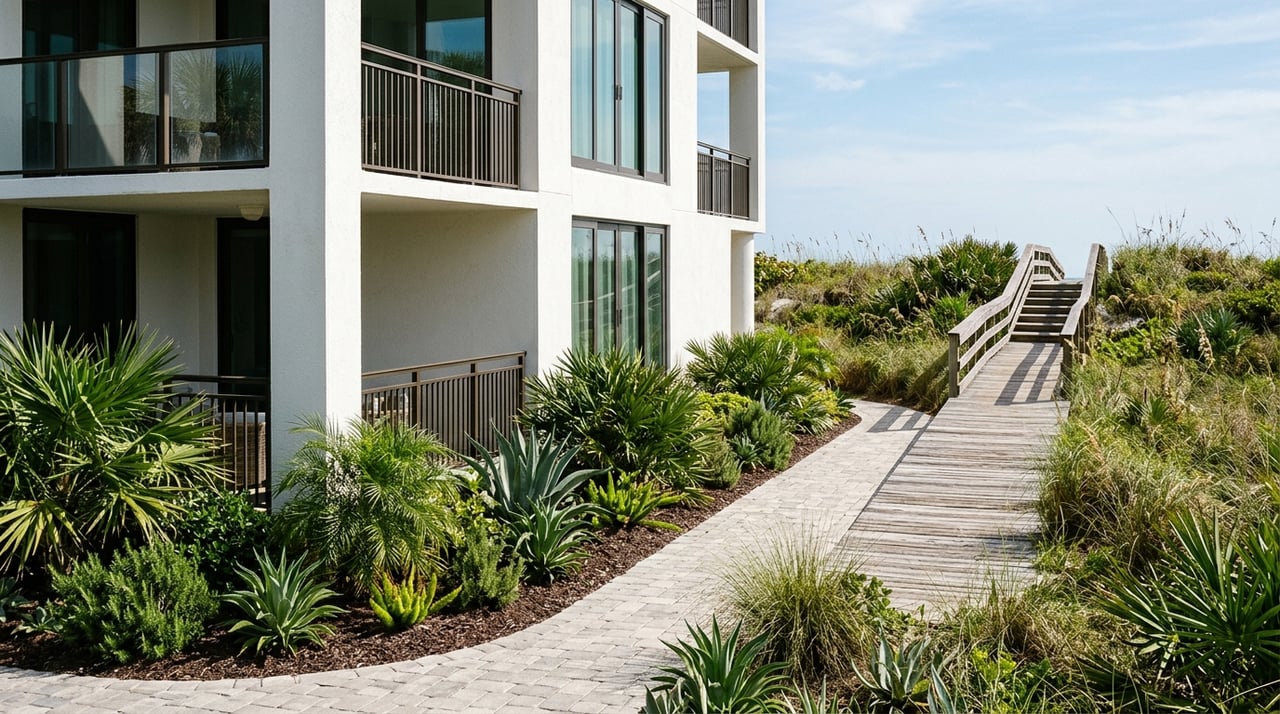
The town also reports 2.4 miles of beaches and 11 dune walkovers for public access. That matters because access points shape how easy it is to actually use a coastal location, not just live near one.
Along U.S. Highway 1, several of the area’s best-known public beach amenities are close at hand. Palm Beach County’s Juno Beach Park includes a guarded beach, a 990-foot pier, parking, restrooms, showers, and designated areas for surfing and fishing.
Loggerhead Park adds another layer to the outdoor lifestyle. The park offers guarded beach frontage, a nature trail, picnic shelters, a playground, and the Loggerhead Marinelife Center, reinforcing the town’s connection to the coastal environment.
Preservation Shapes the Setting
What gives Juno Beach a more protected, less overbuilt feel than many coastal towns is not just luck. It is tied to land preservation and long-term stewardship.
The town’s 2024 financial statements say that about 594 acres, or roughly 43% of Juno Beach’s total land area, has been purchased by the county for preservation. That is a major share of land for a town this size and plays a visible role in how open the area feels.
A key part of that preserved landscape is Juno Dunes Natural Area. The town says the natural area spans 569 acres from the Atlantic Ocean to the Intracoastal Waterway and includes trails and floating docks.
Juno Beach also identifies its coastline as one of the highest-density sea turtle nesting areas in the world. That conservation identity is part of the local lifestyle and helps explain why the beachfront environment often feels more natural and less intensely built than in busier oceanfront markets.
The Housing Mix in Juno Beach
Juno Beach is not a one-product market. According to the town’s financial statements, the local housing mix includes assisted living units, mobile home parks, townhouses, condominium units, and single-family homes.
That variety can be useful if you are comparing different ownership goals. You may be looking for a lower-maintenance condo near the water, a townhouse that offers a lock-and-leave option, or a single-family home with more privacy and space.
Census data show 3,658 housing units and 2,309 households in 2020. The town also states that Juno Beach has more than 3,000 residential units and that the population nearly triples from November through April.
Taken together, those figures point to a meaningful seasonal and second-home presence. If you are shopping here, it is smart to think not just about square footage and finishes, but also about whether a property fits your full-time, part-time, or seasonal use.
What Buyers Should Expect
Because the town is already largely built out, the market often behaves differently than newer coastal areas. You should expect an established inventory profile shaped by condos, near-water and waterfront homes, and select infill or redevelopment opportunities rather than broad waves of greenfield construction.
That can be appealing if you value a place with a settled identity. It can also mean that each property deserves careful review because differences in location, building age, updates, and proximity to the ocean or preserved land may affect value and lifestyle more than they would in a more uniform new-development market.
For second-home buyers especially, Juno Beach can offer a strong fit. The town’s small footprint, residential orientation, and seasonal-resort pattern support its appeal for buyers who want coastal access and a quieter base without stepping into a larger downtown beach environment.
A Small Town With Regional Access
Juno Beach may feel tucked in, but it is not isolated. Visit Florida places it just south of Jupiter, and Palm Beach County groups Juno Beach, Jupiter, and Palm Beach Gardens within the same northern county corridor.
That location gives you a useful mix of calm and convenience. The town’s community materials note proximity to the Jupiter Theatre, golf courses, tennis courts, county parks, shopping centers, and art galleries.
In practical terms, that means you can live in a smaller oceanfront setting while staying connected to a broader amenity base across Northern Palm Beach County. For many buyers, that combination is exactly the point.
Who Juno Beach May Suit Best
Juno Beach tends to make the most sense for buyers who want a coastal lifestyle centered on access, routine, and setting. If your idea of value is being able to reach the beach easily, enjoy established surroundings, and return to a quieter residential environment, the town checks many of those boxes.
It can also be a strong option if you prefer a market with limited large-scale expansion. In a built-out town, scarcity, location, and property-specific details often matter more, which makes informed guidance especially helpful.
If you are comparing Juno Beach with Jupiter, Palm Beach Gardens, or other nearby communities, the distinction often comes down to pace and feel. Juno Beach offers a smaller-scale oceanfront experience with meaningful preservation, public beach access, and a clear residential identity.
Why Local Guidance Matters Here
In a compact market, small differences can carry real weight. A property’s position near the shoreline, access points, preserved land, or established residential pockets may shape both daily use and long-term value.
That is why buyers often benefit from a detailed, property-by-property approach rather than a broad market assumption. In Northern Palm Beach County, subtle location differences can influence how a home lives, not just how it looks online.
If Juno Beach is on your shortlist, it helps to work with an advisor who understands the wider coastal corridor and can help you compare options with precision. That kind of guidance is especially valuable if you are purchasing a second home, buying from out of state, or narrowing choices among several nearby waterfront communities.
If you are exploring Juno Beach or comparing it with other Northern Palm Beach County coastal communities, Steve Rockoff offers discreet, high-touch buyer guidance grounded in local market knowledge and careful transaction management.
FAQs
What is Juno Beach like for full-time living?
- Juno Beach is a predominantly residential coastal town with a small footprint, established neighborhoods, public beach access, and a quieter feel than many larger beach markets.
How much beach access does Juno Beach offer?
- Town materials say Juno Beach has 2.4 miles of beaches and 11 dune walkovers, along with oceanfront areas for walking, biking, swimming, and fishing.
What types of homes are in Juno Beach?
- The town reports a mix of condominium units, townhouses, single-family homes, mobile home parks, and assisted living units.
Is Juno Beach mostly new construction?
- No. The town’s comprehensive planning materials say 98.7% of Juno Beach was already developed, so the market is mostly made up of established housing and redevelopment opportunities.
Does Juno Beach have a seasonal population?
- Yes. The town states that the population nearly triples from November through April, which reflects a meaningful seasonal and second-home market.
What outdoor features make Juno Beach stand out?
- In addition to its beaches, Juno Beach includes preserved land such as the 569-acre Juno Dunes Natural Area, and the town identifies its coastline as one of the highest-density sea turtle nesting areas in the world.