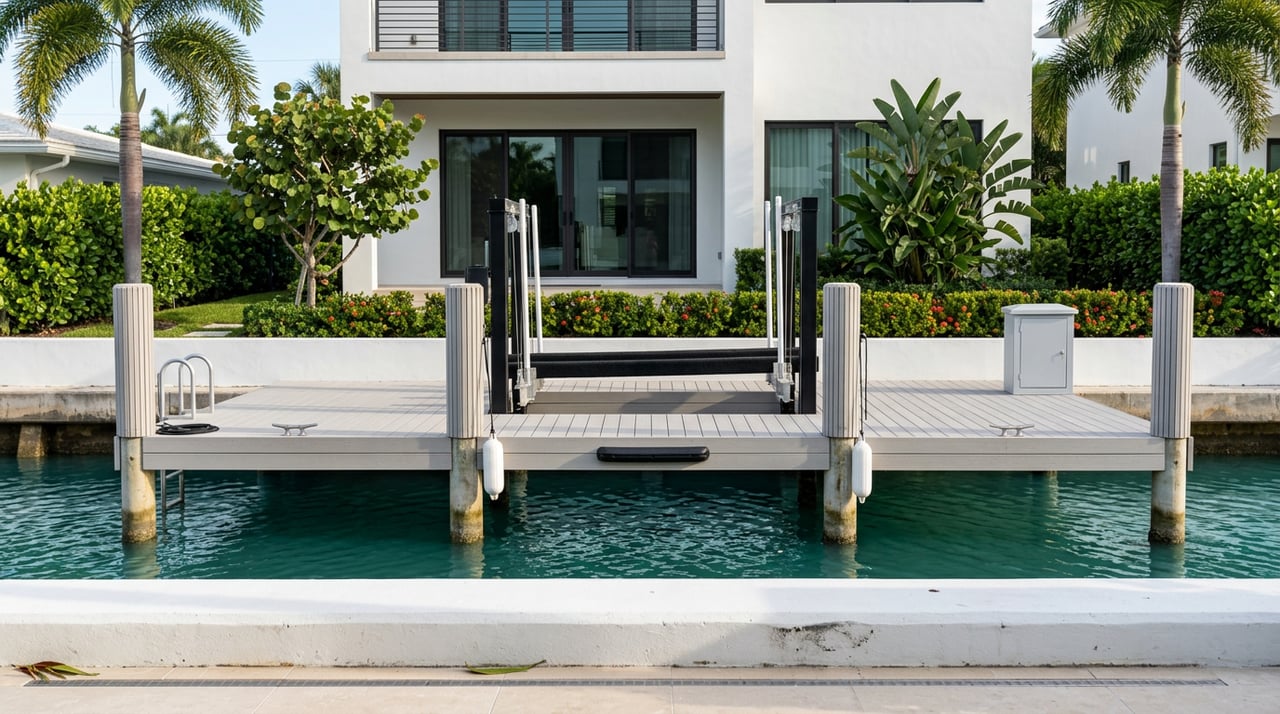
You buy a waterfront home for one reason: to use your boat with ease. In North Palm Beach, the difference between a perfect setup and a constant headache often comes down to a few technical details you verify before you write the offer. If you want fast ocean access, smooth docking, and a dock that actually fits your vessel, you need a focused checklist. In this guide, you’ll learn the key features that matter, what to verify, and where to find authoritative sources. Let’s dive in.
Why North Palm Beach works for boaters
North Palm Beach sits on the Intracoastal Waterway, also called Lake Worth Lagoon, with many homes on canals that open to the ICW. The nearest ocean access is Lake Worth Inlet, the main approach for the Port of Palm Beach. Several full-service marinas, including Old Port Cove, sit off private channels only a few miles from the inlet, which helps if your private dock has limits. You can review facilities and approach details for a nearby example at Safe Harbor Old Port Cove.
Tides here are modest compared with many coasts. Local marinas commonly reference about a three-foot range. Even so, you should plan using depths at mean low water to protect your keel and props. For local tide benchmarks and real-time readings, check the NOAA CO-OPS North Palm Beach station.
Match your boat to the dock
Slip length, beam and orientation
Start by matching the vessel to the slip. Compare your boat’s length overall, including bowsprit and swim platforms, to the usable slip length. Do the same for beam, adding room for fenders. Ask the seller for any as-built dock or slip plan. A slip that only equals your LOA leaves little room for error, especially in wind or current.
Depth at the dock and along the approach
Depth is make or break. Request recent depth soundings for both the slip and the route from the property to the ICW. Those soundings should be referenced to mean low water, not an average high tide. Charted depths can shift with shoaling, so verify against the NOAA U.S. Coast Pilot and any published approach depths from nearby marinas.
Dock type: floating vs fixed
Floating docks move with the tide, which can make boarding simpler. Fixed pile docks are sturdy, but boarding height varies with tide, and lift clearance can be tight. Many area marinas use modern floating docks. If you are in a community with shared docks, confirm whether the dock type fits your vessel and mobility needs. You can compare standards at a local benchmark like Old Port Cove’s floating-dock setup.
Boat lifts and lifting capacity
If a property includes a boat lift, confirm the rated capacity, condition, and service records. Ask to see permits and any inspection history. Lifts are common permit items in local marina upgrades, which you can see in U.S. Army Corps public notices for North Palm Beach Marina projects, such as this USACE notice describing dock and lift work.
Shore power, water and pump-out
Larger boats may need higher-amp shore power and in-slip pump-out. Full-service facilities in the area often provide high-amp pedestals and pump-out, which is a useful benchmark if your private dock has limited utilities. Review an example of available marina utilities at Old Port Cove as a comparison point.
Seawalls and edge protection
A seawall or bulkhead in good condition protects both your dock and your home site. Ask for construction records, repairs, and permits. Seawall work typically requires state and local authorization. The Florida DEP explains submerged-lands and environmental resource permitting for these projects in its ERP and submerged lands guidance.
Ownership, rights and responsibilities
Clarify whether the dock is privately owned, deeded to the lot, part of an HOA, or in a shared basin. Ask who pays for dredging, seawall repairs, dock replacement, and lift maintenance. If the slip sits in a private basin, request the basin’s maintenance plan and reserves. If the dock occupies submerged state lands, confirm that any lease or authorization exists and is transferable.
Navigation constraints on the way to the inlet
Bridge clearances and air draft
Your air draft can decide if you can leave the dock on your schedule. The U.S. 1 (Parker) Bridge in North Palm Beach is a bascule span with an approximate 25-foot vertical clearance at center when closed. You should always confirm current clearances and operating details in the NOAA Coast Pilot and official notices. Some fixed bridges in side canals have much lower clearances, often in the low-teens or less, which you can see in local marina resources like this Loggerhead Riviera Beach reference. Plan your route from the property to the inlet before you fall in love with a house.
For a quick reference to the Parker Bridge fact pattern, you can also see a Coast Pilot excerpt, then verify in the latest official publication.
Drawbridge schedules and delays
Some drawbridges open on a fixed schedule, while others open on request with restrictions. Schedules and rules change, especially during peak traffic or special events. Always confirm the latest details in the NOAA Coast Pilot and current Local Notices to Mariners before you plan regular transits.
Inlet conditions and shoaling
Lake Worth Inlet is the primary ocean access for many North Palm Beach boaters and serves the Port of Palm Beach. While the inlet is maintained for larger vessels, small private channels can shoal and change seasonally. Ask sellers or associations about last dredge dates and which party funds maintenance. For context on the inlet, review this Lake Worth Inlet overview.
Speed zones and manatee protection
Portions of the ICW and nearby canals have seasonal or year-round manatee and no-wake zones that slow transits. Map the route from the home to the inlet and note zones that impact timing, especially during manatee season. You can view current rules and protected areas through the Florida Fish and Wildlife Conservation Commission.
Nearby marinas, fuel and service
Safe Harbor Old Port Cove
Old Port Cove is a full-service marina with floating docks, fuel, in-slip power, and pump-out. It sits off a private channel a few miles north of Lake Worth Inlet. If your private dock has draft or utility limits, a slip here can complement your home setup. Explore facilities and approach details at Safe Harbor Old Port Cove.
North Palm Beach Marina and PGA Marina
Local marinas also offer wet and dry storage, haul-out, and maintenance. Services and dockage can change as facilities upgrade, which is reflected in USACE public notices. If you plan a hurricane haul-out strategy, include these facilities in your annual plan.
Town of Palm Beach Marina and port services
For specialty needs, customs for international trips, or large-yacht services, review county facilities that support the Port of Palm Beach area. The Town of Palm Beach Marina is a nearby resource to include in your service network.
Day trips and public docks
Peanut Island is a favorite day destination with county-managed docks. Note any posted time limits and day-use rules before you plan. You can review the current details at Palm Beach County’s Peanut Island boat docks page.
Permits, insurance and a due diligence checklist
Before you make an offer, line up the right records, measurements, and verifications. Use this checklist to protect your boating plans and your investment.
- Request dock and seawall as-built drawings and all permits. Confirm permit numbers with issuing agencies, including the Florida DEP’s submerged lands and ERP program and the USACE Jacksonville District.
- Obtain a recent depth sounding for the slip and approach, referenced to MLLW. Verify against NOAA Coast Pilot and published marina approach depths.
- Confirm bridge clearances and drawbridge schedules for your exact route. Use the NOAA Coast Pilot and Local Notices to Mariners. If your vessel has a tall air draft, factor in tide at planned transit times.
- Ask who pays for dredging and what past projects cost. In a private basin, request the maintenance plan and reserves. Cross-check with USACE records and notices.
- Verify flood risk. Get an Elevation Certificate and confirm flood zones through FEMA’s Flood Map Service Center. Ask insurance brokers for homeowner, flood, and boat coverage estimates, including hurricane haul-out options.
- Commission inspections. Order a marine survey of the dock and lifts, and a seawall or coastal engineering inspection for structural integrity. If the dock uses state submerged lands, confirm any lease or authorization via the Florida DEP.
- Review HOA or marina rules. Confirm slip assignments, size limits, live-aboard restrictions, and guest policies. For local ramp and storage questions, see Village resources such as resident programs in the Village of North Palm Beach FAQs.
- Map manatee and speed zones for realistic travel times. Check current rules on the FWC protection zones page.
Compare two homes in five steps
Use this quick process to decide which property truly fits your boat and lifestyle:
- Measure boat vs dock. Confirm LOA and beam against usable slip space, including fender clearance and room to pivot into the slip.
- Verify depth. Get soundings to MLLW for the slip and approach, then check charts and marina references.
- Trace your route. List every bridge, note fixed and bascule spans, and confirm clearances and schedules in the Coast Pilot.
- Check utilities and structures. Confirm shore power, water, pump-out, lift capacity, and seawall condition with permits and inspection reports.
- Confirm rights and costs. Document ownership of the dock, who pays for dredging, and any HOA or municipal rules that affect use.
Work with an advisor who understands docks
The best waterfront purchase is equal parts lifestyle and logistics. You deserve a guide who pairs local market knowledge with meticulous due diligence, including permits, dock rights, and flood considerations. If you are planning a move in Northern Palm Beach County, connect with Steve Rockoff for a discreet, strategic consultation tailored to your boat and your goals.
FAQs
What bridge clearances affect North Palm Beach waterfront homes?
- The U.S. 1 (Parker) Bridge is a bascule span with about 25 feet of clearance at center when closed; verify current details in the NOAA Coast Pilot and check your exact route for lower fixed bridges in side canals.
How do manatee and no-wake zones impact boating from these homes?
- Portions of the ICW and canals have seasonal or year-round slow-speed rules that extend transit times; review the latest maps and rules on the FWC protection zones page.
What permits are needed to replace a dock or seawall in North Palm Beach?
- Dock and seawall work often requires state and federal authorization; start with the Florida DEP’s ERP guidance and confirm any federal permits through the USACE Jacksonville District.
How close is ocean access from typical North Palm Beach waterfront areas?
- Many properties and marinas connect to the ICW with access to Lake Worth Inlet, the region’s primary ocean inlet; for context on the inlet, see this Lake Worth Inlet overview and verify your specific route for bridges and depth.
How should I verify depth at a private dock before buying?
- Request recent soundings to mean low water for both the slip and approach, then confirm against the NOAA Coast Pilot and local marina approach notes; commission a professional sounding if none exists.